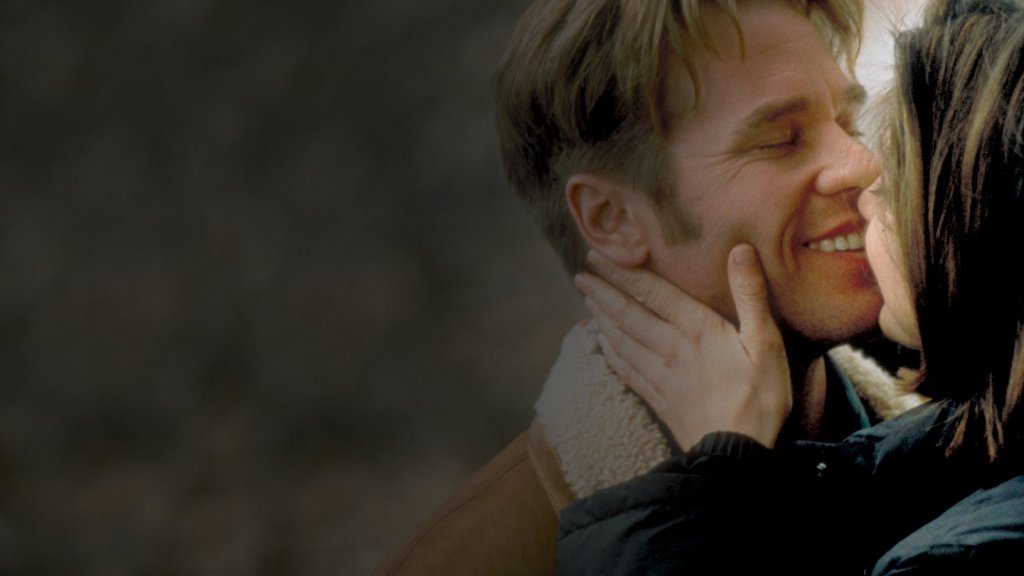
Once upon a time…
If you’re a woman, you know how this story goes. There’s a princess or farm girl or unfulfilled career woman. She is alluring and young, but sad and lonely. And then, one day, her Prince Charming arrives. The details differ from telling to telling, but the ending is always the same: he saves her from her dull life full of solitude and drudgery and they live happily ever after.
It’s a bunch of bullshit, of course, but somehow, we still feed it to little girls and young women. And many of us, even those who consider ourselves feminists, strive for it, stepping over ourselves and our sisters in the pursuit of a perfect life and relationship that simply doesn’t exist.
Don’t take from this—as many men on the Internet seem to—that women need to reduce their standards. The insidiousness of the fairy tale requires that already, by miles, over and over, especially when we’re in a relationship or married. We don’t want to be the ones who failed, who will inevitably be blamed for the downfall of the family, for his cheating, for not trying hard enough.
Now here’s the part where I get very personal…
For as long as I can remember, I was told by my mother that my value would come from the man I would marry and the children I would bear, even as my own father treated her horribly. I was determined to do better than she did. I wanted to go to college and was doing that on my own, when I met a man who told me he loved me on our second date. We married a year later. I was 21.
Marriage was not exactly as I had been hoping. Almost from the start, my spouse treated me as an afterthought as I chased after him on eggshells, terrified of the cutting words or cold shoulder a single crack would cause.
I didn’t have friends or family of my own. That was a side effect of my marriage. I had him and his family. His sister and mom were my best friends. The few times I went out with potential new friends, he made me feel badly about leaving him alone, but time spent with him was on his terms even as he didn’t want to make any decisions.
He rarely bought me birthday or Christmas gifts as I was responsible for shopping for him and everyone in his family. The last Christmas we were together I gave him a list and was delighted to find he got me everything on it. His mother then shared she had done the shopping and wrapping for him. She had offered; she knew how it felt to be married to a man who didn’t prioritize his wife, and she wanted to give me a good holiday. I suspect my husband learned what he had gotten me as I opened each gift. When I confronted him, he didn’t understand why I was upset.
The cooking and cleaning fell to me, even as I worked a full-time, demanding job. Not by choice, but by the gender roles we grew up in and then fell into. He said it was fair because he was responsible for the yard and house maintenance, even as our home fell into disrepair and grass and blackberry bushes grew so unruly only professionals could tame them. He would leave piles of his stuff around the house, saying he would take care of it, even as the previous piles sat for years. I would ask if he wanted me to call someone to take care of the sagging bathroom floor or the questionable plumbing and he would get angry as if I had insulted his manhood. Yet, the problems got worse and worse, and my only choice was to look away. Pretend, like with everything else in my marriage, that all was just fine.
He once told me no one was forcing me to clean the house days after he yelled at me for finding crumbs under the toaster.
And then, one late summer day, he sent me a text message. He was unhappy and didn’t know why but was pretty sure he wanted out of our marriage. This was a week after our 16th wedding anniversary. A text message. To end our marriage.
Of course, he came home, but I would’ve preferred he had stayed away. He didn’t talk to me except to say the cruelest of things (“I don’t think I ever loved you” being one of his greatest hits). We lived under the same roof for another few months before separating. And when he did leave, he took only the items he cared about, leaving his mess and the falling in house to me.
I lived with his things stuffed in a back bedroom for almost three more years. Never wanting to complain too much and, when I would to his mom and sister (a big mistake…), I would be told to give him time. Once again, I felt forced to wait on him.
He never said the word ‘divorce’ and would shush me when I would want to talk practicalities. He earned significantly more than I did. My career and education always took a back seat to his even as I supported him (with an assist from savings and unemployment) through the job losses that were status quo in the tech industry of the late 1990s and mid-2000s. ‘It’s not the right time,’ he would say when I would ask about going back to school, as he would be studying for a new certification, planning to go to a convention on our dime, or heading out with his friends. And because public transportation is as it was where we lived, I would spend my evenings waiting for him to text to tell me when he was ready to be picked up from work. Sometimes that would be at 7 pm and we would enjoy dinner together; other times it was after midnight and he got in my car smelling like a distillery. On the ride home, he would ask about my day, clearly not caring and just waiting for his chance to talk. Over time I figured out he wasn’t sharing details about his day or work because he cared about doing that with me; he was filling the silence and it was better than having to pretend to care about what I had to say.
In the end, I divorced as badly as I married. His sister convinced me to not push too hard for anything. We were—and would always be, she said—sisters. A bad divorce would jeopardize that. Afraid of losing my only family, I let him convince me to share an attorney. By that point, I was so wrung out—in the middle of home repairs that I was barely cobbling together from my meager savings—that I just said yes to get it over with.
It would take me years to parse out what I had been through in my marriage and I am not sharing the half of it here. To no one’s surprise (even mostly my own), his family—including the sister—ditched me as soon as the signatures were dry on the divorce paperwork. In the end, we were married for 19 years. By the time, it was over, I was a shell, on the verge of perimenopause, and terrified of the future.
People talk about how divorce destroys them with the drawn-out fights and struggles. In the end, it was the silence and complacency that did me in.
While I was married, I’m embarrassed to say, I saw myself as having achieved something special, as if I was somehow—with a marriage, house, and career, such as they were—more accomplished than other women. This, too, is the insidiousness of the fairy tale.
We, as women, have been taught to sneer at those who are (supposedly) beneath us. Those with less education, status, and money. Those without a partner (or the right kind of partner) or kids. Those who became, through choice or circumstance, single mothers. Those who chose peace over the endless pursuit of a lucrative career, romantic love, or the “perfect” body. Those who dare to accept themselves as they are, gain weight, or get old. From an early age, we are taught to compete with one another—all so we won’t be left behind, so we won’t be the failure, the mocked and ridiculed girl on the sidelines begging for scraps. It is never enough.
But here’s the terrible reality: how they treat the supposed “worst” of us is how they will eventually—and want to—treat all of us.
I’m not just talking about men here, but also women who somehow still believe the fairy tale (and our misogynistic, capitalistic system writ large) will work for them despite all the evidence to the contrary. Beauty, grace, talent, submission. None of those things shield women from the fact that, by and large, we are a commodity. A thing to be bought and sold, used and tossed aside when we dare to lose our ability to have kids, become unpleasing in some way, speak our minds too loudly, or step out of line from the societally accepted definitions of femineity.
It was only after I stopped believing the fairy tale and accepted my culpability in keeping it alive did I begin to heal. It will be a life long process. I will always be sad that I never got to have children or experience college as a young woman or all the other things I gave up in pursuit of the fairy tale.
If you’re reading this, are a woman, and can’t identify with any of it, I envy you and applaud your parents. And, if you found the fairy tale—a man who is always kind and considerate (the bar is in the basement)—congratulations. I am so happy for you and hope you’re prepared, just in case.
We must acknowledge that we are living in strange times, indeed. There was a period—while I was in my 20s and 30s—that the idea of marriage being a woman’s top priority seemed to be fading. Of course, there is nothing wrong with wanting romance and marriage, but there was more being said about women valuing their own autonomy and needs over that of a finding a partner.
Now, we are regressing. Whether or not you would ever have an abortion, the overturning of Roe v. Wade hurt every woman in the United States. In a decision made by mostly men, we lost our right to bodily autonomy. Spare me about it being about the life of a child. Abortion is not legal in any state—except to save the life of the mother—beyond the point of viability.
With GLP1 medications, women are making themselves smaller and smaller physically, which is, in some strange way, taking the place of any bodily autonomy we once enjoyed. Strong is not celebrated. Health is an afterthought. Many of the same people championing the use of drugs with unknown long-term side effects to lose a pesky 20 pounds question vaccines and don’t see the irony of touting “diet and exercise” (when for many fresh foods and hours in the gym are an impossibility) as the best medicine.
More and more young women are consuming and celebrating “trad wife” content, which is just an extension of the fairy tale. Terrible news: those aren’t trad wives you’re watching; they’re content creators. Like the fairy tale, it’s all subterfuge.
And then there are the men. There’s a male loneliness epidemic, or so I hear. Let’s be clear: I feel for them, I do. They’ve been as hurt by the fairy tale as much as anyone else, and are being manipulated by the same people who see a woman’s main purpose as pregnancy and child rearing. Many of these men believe they’re owed a woman that meets their impossible standards, who is always willing, able, and agreeable. They’ve also been led to believe that all women care most about a height over six feet, washboard abs, and a big bank account. This is simply not true. Be kind. Care about what she needs and wants. Be supportive. Wash a dish on occasion (or much more). As a bonus, make her laugh. Do these things and you’re doing better than most of the men in relationships I know.
So, what to do? I believe that all people—no matter their gender—should make their own health and financial independence a priority. We live in a capitalistic society and there’s no getting around that. We should not and cannot depend on someone else for a roof and food. We all deserve to experience the joy of romantic love if we so choose, but not at the potential expense of our well-being and safety.
I’ve shared and said a lot here. These are the things that I’ve been unpacking in the current climate and as I inch forward towards the 10-year anniversary of my divorce. Since then, I’ve fixed up the house (with an eye on finally remodeling the kitchen in the next couple of years) and started a business that pays a living wage to its employees and does good work. I have hobbies and friends, incredible people I am so thankful for. I am, most days, proud of myself and, especially, that woman who came before who endured so much to get me to here, to this point where I can, finally, try to live even more fearlessly…with a gentle nudge by Val Kilmer (lol).
Society tells us a lot of lies. We have to be strong enough to reject what isn’t real or practical and live on our own terms. If a woman wants to be a stay-at-home mom, that’s wonderful…and also she cannot trust that forever is real. Fairy tales don’t exist, but each of us has the power to be the hero of our own story.
 The Unbearable Lightness of Val Kilmer